AEM is only as useful as the metadata behind it.
Adobe Experience Manager can manage, deliver, and personalize content at scale. But when the metadata coming in is inconsistent — mismatched fields, missing values, taxonomy that varies by team or region — findability breaks down, analytics lose context, and content velocity slows. Claravine standardizes that metadata before it ever reaches AEM, so the content performs the way it was supposed to.

THE PROBLEM
Content operations stall when metadata isn’t agreed on
Adobe Experience Manager is built to handle enterprise content at scale — assets, web pages, fragments, and personalization rules. Most organizations have the platform configured correctly. What slows them down is the metadata coming into it.
Different teams apply different tags. Agency partners use naming conventions the internal team doesn’t recognize. One region calls it one thing; another region calls it something else. By the time assets land in AEM, fields are incomplete, taxonomy is off, and the findability that AEM promises doesn’t materialize.
The problem isn’t AEM. It’s what happens before assets are ingested — before tags are applied, before campaigns go live, before anyone runs a search. That’s where Claravine works.
HOW CLARAVINE FITS
What it does
Claravine integrates with Adobe Experience Manager to standardize the metadata your teams create before it reaches AEM. The result is cleaner assets, faster findability, and analytics you can actually use downstream.
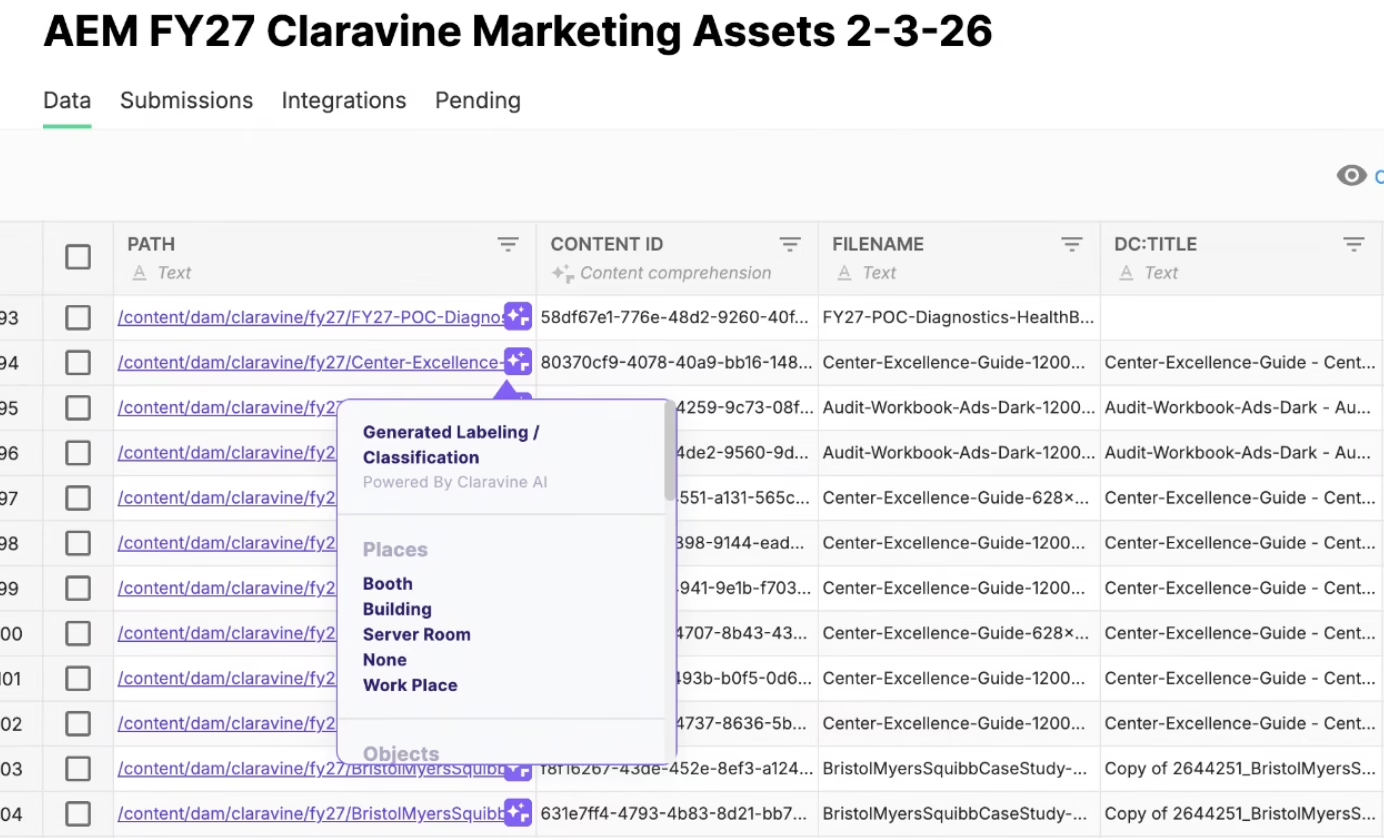
Consistent Metadata Across Every Team and Market
AEM’s value depends on the taxonomy behind it. When different teams apply different tags to the same type of asset, search fails, personalization misfires, and reporting loses context. Claravine standardizes taxonomy, naming conventions, and metadata fields at the point of creation — so the data arriving in AEM is consistent regardless of who created the asset or where.
That consistency means AEM has what it needs to deliver the right content to the right experience, at scale.
Asset Data That Holds Up in Analytics and Downstream Systems
Metadata applied in AEM doesn’t stay in AEM. It flows into Adobe Analytics, Customer Journey Analytics, and other downstream tools. When that metadata is inconsistent at the source, the reporting downstream inherits the same problems.
Claravine standardizes the metadata on every asset and page at creation, so the data flowing out of AEM into your analytics stack is clean from the start. What your team defined in Claravine is what shows up in every connected system. No reconciliation layer required.

Less Time Fixing. More Time Publishing.
The first thing most content and operations teams do before any AEM workflow is fix metadata — correcting field values, filling in missing tags, chasing down the team that uploaded assets without a naming convention. Claravine removes that step.
When assets arrive in AEM already standardized, teams can search, find, and use content immediately. The work shifts from cleanup to actual content delivery.
Who its for
Built for the teams that need AEM to actually work.
Marketing operations & content teams
Your AEM investment is only as good as the metadata feeding it. If taxonomy isn’t enforced before assets are created, your team spends time correcting fields instead of building campaigns. Stakeholders expect the platform to surface what they need — and when it doesn’t, operations owns the explanation.
Claravine puts standards at the point of creation. By the time an asset reaches AEM, it already has the right tags, in the right format, agreed on by the right people.
- Cut time spent fixing metadata before content can be used
- Trust that asset fields mean the same thing across teams and agencies
- Deliver AEM workflows that don’t stall at ingestion
Analytics and data leaders
Every downstream system that pulls from AEM — Analytics, CJA, your data warehouse — inherits whatever taxonomy structure was applied upstream. If that structure is inconsistent, every report built on it carries the same gap. You end up explaining data discrepancies instead of answering business questions.
Claravine standardizes how metadata is defined and applied across every team and market contributing to AEM — so the data flowing downstream is clean from the start, not cleaned after the fact.
- Consistent dimensions from AEM into every connected analytics tool
- Attribution that accounts for the full campaign path, not just what was tagged correctly
- Reports that hold up when someone asks where the numbers came from
See what AEM looks like when the metadata is right.
Most AEM problems start upstream. Claravine fixes them there — so your team spends time on content and campaigns, not on data prep.
Ready to stop fixing metadata and start using it?
Book a 30-minute no-pressure demo to get started.